
#17: On Smoking (Part 2)
Part II in a series of essays that explores my love/hate relationship to cigarette smoking, and by extension to myself.

Hi all, this is Part II in a series of essays that explores my love/hate relationship to cigarette smoking, and by extension to myself. You can check out Part I, where I trace just how I started smoking in the first place. Part II makes sense of the why.
I
It turns out, the worst of my other fears also came to pass. Somebody from school and his family did actually see me smoking that fateful day and sure enough, the entire school soon got to know. Whenever jokes or the occasional lectures on the evils of smoking would come up, my classmates would go, “Sidd *cough* *cough* hesh”. But that hot mix of embarrassment and paranoia dissipated. Because for someone who always felt like an outsider, who was called a weirdo, smoking was a gateway to some kind of acceptance. Within a few weeks I was a wallflower at entirely new circles beyond my immediate class and tuitions.
Sure, I might not be able to share how The Gypsy King’s A Mi Manera was as, if not more, awe-inspiring than the original My Way by Frank Sinatra. But at least there was the camaraderie of stubbing out a cigarette under your feet and smelling like an ashtray together, no?
Anyhow, I soon found that smoking was beyond the performance aspect of it for me. I quickly got tired of hanging out in groups larger than three people, feeling myself lost in the same banalities day in and day out. I would make it a point to smoke a few cigarettes when I was completely alone and brood on my life’s purpose as I watched The Sopranos or Good Night and Good Luck.
There was also something quite alluring about the mastery of the entire ritual at the time. In the early days at college, a well-meaning close friend of mine saw the loose strands of smoke escaping out my mouth like cattle from a pen, and he kindly1 let me know I was “mouth fagging” a rookie mistake considered a waste of good cigarette and the mark of a greenhorn.
To be a “true smoker” meant moving past the limits of increasing my risk of oral cancer and committing, and I mean properly committing, to lung cancer as well. The key change in technique was to “take it in”. Instead of taking in a puff and trying to gargle with it, you now had to breathe in air through your mouth after a puff and fog the carcinogenic mix directly over your pink innocent little air sacs in your lungs. You then could control the flow of the smoke on the exhale.
Within a month, I got past the burning sensation in my eyes and throat, the hacking, and the wheezing to become a direct-to-lung convert. I could now channel streams above the heads of those around me with a sharp tilt of my chin. Alternatively, I would temporarily turn my lips into a small spout to one side and get the smoke to take a small detour past the napes of their necks.
This is how our time would be spent between lectures, in bars, in the hostel, over cups of tea at tapris, and the night canteen. I remember one time as I made my way back from one of these chai-sutta sessions, one of my batchmates wrinkled her nose as as we passed by and asked,
“Why do you smoke so much?”
II

I am writing this with half of my mind making plans to go to a cafe, order a sheesha and see if I can still blow smoke rings. The kind that have the seeming solidity of a ring light turned on, and then drift away slowly, stretching and stretching till it would finally be broken into little wisps and fade into the air.
The question still lingers with me though, “Why did I smoke so much then?”
After undergraduation, I had a quarter-life crisis in my 20s, unsure of what I wanted to do next, but sure as hell didn’t to continue with my masters in urban planning at that time. I told my parents I want to give up on this post graduation after a semester. My mother, in a rare moment of frankness about my aimlessness and shortcomings, said,“Something went off with you once you got out from the 10th grade.”
Deep down, I knew it too. I just didn’t want to face it. Personally, the transition from 10th was brutal. I was suffocated by the ceaseless assault of new theorems, mugging up proofs of those theorems, and logging in new experiments in the lab to prove said theorems.
I do not remember much about this time, as I was spaced out for most of it, trying not to get overwhelmed. Barring the occasional film and some TV shows, my regular refuges – novels and music – were sacrificed in the name of preparing for the future.
And the future itself? It was a spectre: the dreaded IITs and AIEEEs, the faceless competition of exponentially smarter, motivated students across the country, and an equally faceless society demanding decisive answers from a 16-year-old on what they want to do with their life.
Out of a sense of duty, I would force myself to sit in front of my books, only to find my mind slippery, refusing to focus, resisting with the restlessness of a horse being broken in.
As I was playing the role of Jack the Dull boy2, the others around seemed to be scoring better grades, and having a lot of fun while doing it. They were doing the regular urban teenage things: boyfriends meeting their girlfriends, clandestinely smoking and drinking, spiking or styling their hair, dressing up, hanging out at the mall, and sharing pictures on Facebook.
I didn’t know it then, but I resented them. Here I was trying so hard to live up to the ideal of the Adarsh Baalak, and it seemed that everyone else was just breezing through life and getting rewarded for it.
The other lie I told myself was that I was above all of these teenage things, when in fact I so wanted the life they were living. Relaxed, having fun, going on dates. Spending hours talking about inconsequential high-school-drama things that was our world at that time. But the biggest obstacle to living this life was no authority figure: neither my parents nor my brother, not any nosy neighbours or any teachers even, but myself.
At the time, I believed that my thoughts and emotions were an accurate representation of reality. My emotions are what I am. And what I was were the emotions I always tried to avoid: fear, guilt and shame, sadness bubbling up as repressed anger. Always on high octane.
So overwhelming that I felt powerless in front of their sway. At the time, I didn’t trust my own judgement to decide how best to lead my own life. This is where I looked to role models to better conform to norms of masculinity. These folks seemed to keep it together, no matter how difficult things got.
Never mind the fact that a lot of these characters unravelled or imploded in a spectacular way on the screen or on the page. But what was important to me was that I was in control of my feelings and emotions. And so by superficially practicing the benchmarks of masculinity, I felt I would be able to claim some portion of masculinity for myself, and by extension, have some control over my life.
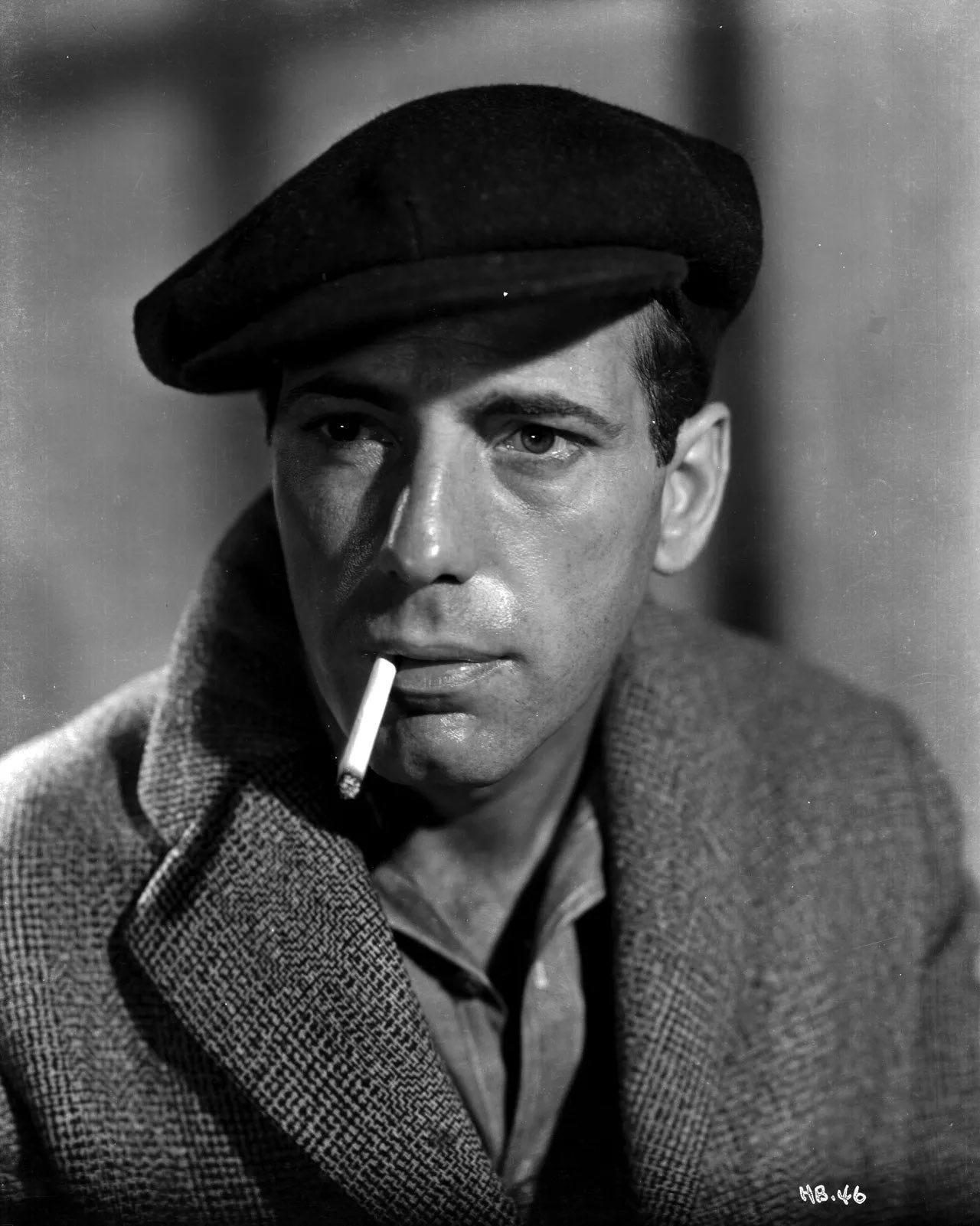
When John Hamm as Mad Men’s Don Draper coolly lets out jets of smoke from his nostrils, I learnt to do the same (Oh! He looks like a dragon!). Just like Al Pacino in The Godfather, I (almost) learnt to let out a small, flat mushroom cloud of smoke, only to suck it back in the same second. I even fought through tears and suffocation as smoke would waft into my eyes and nose as my lips stubbornly puckered onto a burning cigarette.
Even as the pressure began to build up in myself in face of all these dichotomies, my sense of inhibition was so strong that even then I couldn’t fathom myself smoking one. That all changed when I saw my brother smoking for the first time. While verbally he did warn me to not take up cigarette smoking, his actions took off the mask of morality around cigarette smoking, and gave me permission to try one myself. Because as much as I resented and felt jealous of my elder brother for seemingly effortlessly acquiring all the standard markers of “success”, he was also someone I looked up to because he is a blood relative who achieved said success.
Once I started smoking in earnest in university, it didn’t take long for it to become a part of my identity. I began to develop a whole new aura of nonchalance and stylishness behind which I could hide all my issues. In this way my first two semesters went by in a haze of smoke and self deception. In between, the holidays rolled by and I was back at home, eager to get my nicotine fix once a day at the corner tapri from the house. Just like my brother did.
In an ironic sense of déja vu, I had another conversation with my brother, now in his first job.
“Dad saw you smoking from the car on his way to work,” he said.
“He said to find a better spot.”
I say kindly because the alternative would have been to call me out in front of my entire group and made fun of me till we graduated. Which is exactly how my years at undergrad went.
There is an interesting Hindi short story of Prem Chand’s called Bade Bhai Sahab which captures the emotional cost of playing this role.
Hugely relatable. Good long form writing
I love so many lines, but this one the most - This meant moving past the limits of increasing my risk of oral cancer and committing, and I mean properly committing, to lung cancer as well. Look forward to part 3!